


Yes, artificial grass can be safe. But it is safe only when the grass fibres, backing and infill are made from tested, certified materials, and when it is installed the right way. The brand matters. Before you buy, ask for lab reports such as REACH, RoHS and EN 71-3.
Quick takeaways
- Certified artificial grass is generally considered safe for children and pets.
- Cheap, untested grass is the real risk. Ask to see the test reports.
- Artificial grass can get hotter than natural grass in direct sun. Plan for shade and cooling.
- For sports, the infill matters most. Cork and coconut are natural options, and low-infill systems use less infill.
- Look for PFAS-free and heavy-metal-free proof if safety is your top concern.
What is artificial grass made of?
Most artificial grass has three parts:
- Grass fibres (yarn): usually polyethylene, polypropylene, or nylon.
- Backing: the base layer that holds the fibers in place.
- Infill (optional): sand, rubber, cork, or coconut that sits between the fibres.
Sports turf is built as a full system: fibers, infill, and, in many cases, a shock pad under it. Landscape turf for homes is usually simpler: fibres and sometimes sand infill. Materials differ from one company to another, which is why one brand can be very safe while another is not.
Is artificial grass safe for kids?
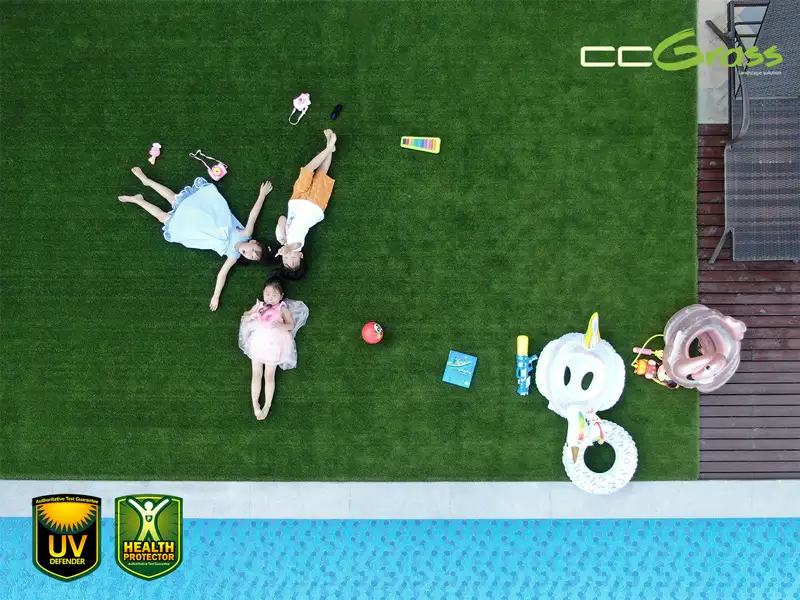
Good-quality artificial grass is a popular choice for home lawns, schools, and play areas. The key is proof of testing. CCGrass products are tested for safety standards such as REACH, RoHS, EN 71-3, DIN, and ASTM [add certificate links]. These tests check for harmful substances such as lead and other heavy metals.
Artificial grass also has some practical benefits for children:
- No grass pollen, which may help children who get allergies from natural grass.
- No mud, no pesticides, no bare patches.
- A softer landing when it is installed over a proper shock pad. If you want a fall-height claim, ask for the critical fall height test report for the exact system, since the result depends on the pad and its thickness.
See our children play area surfaces for school and park projects.
Is artificial grass safe for dogs and pets?
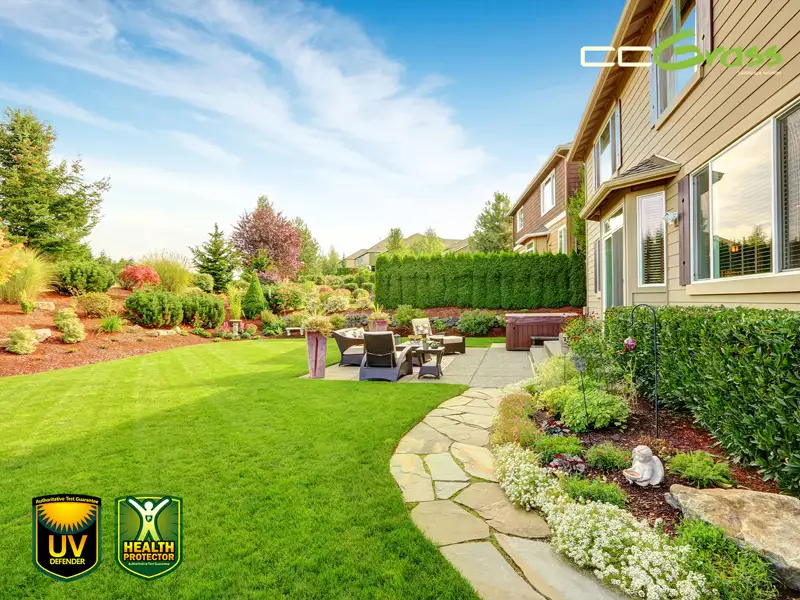
Yes, certified artificial grass is commonly used for dogs. A few simple habits keep it healthy:
- Remove solid waste quickly and rinse the area with clean water.
- Choose turf with good drainage so urine does not collect.
- Use pet-safe cleaners. Avoid strong chemicals.
- Pick turf with an antimicrobial treatment only if the supplier can show test results [add test reference].
Avoid very hot surfaces for paws in peak summer. See the heat section below.
Read our deeper guide: is artificial grass safe for children and pets.
Is artificial grass safe for players?
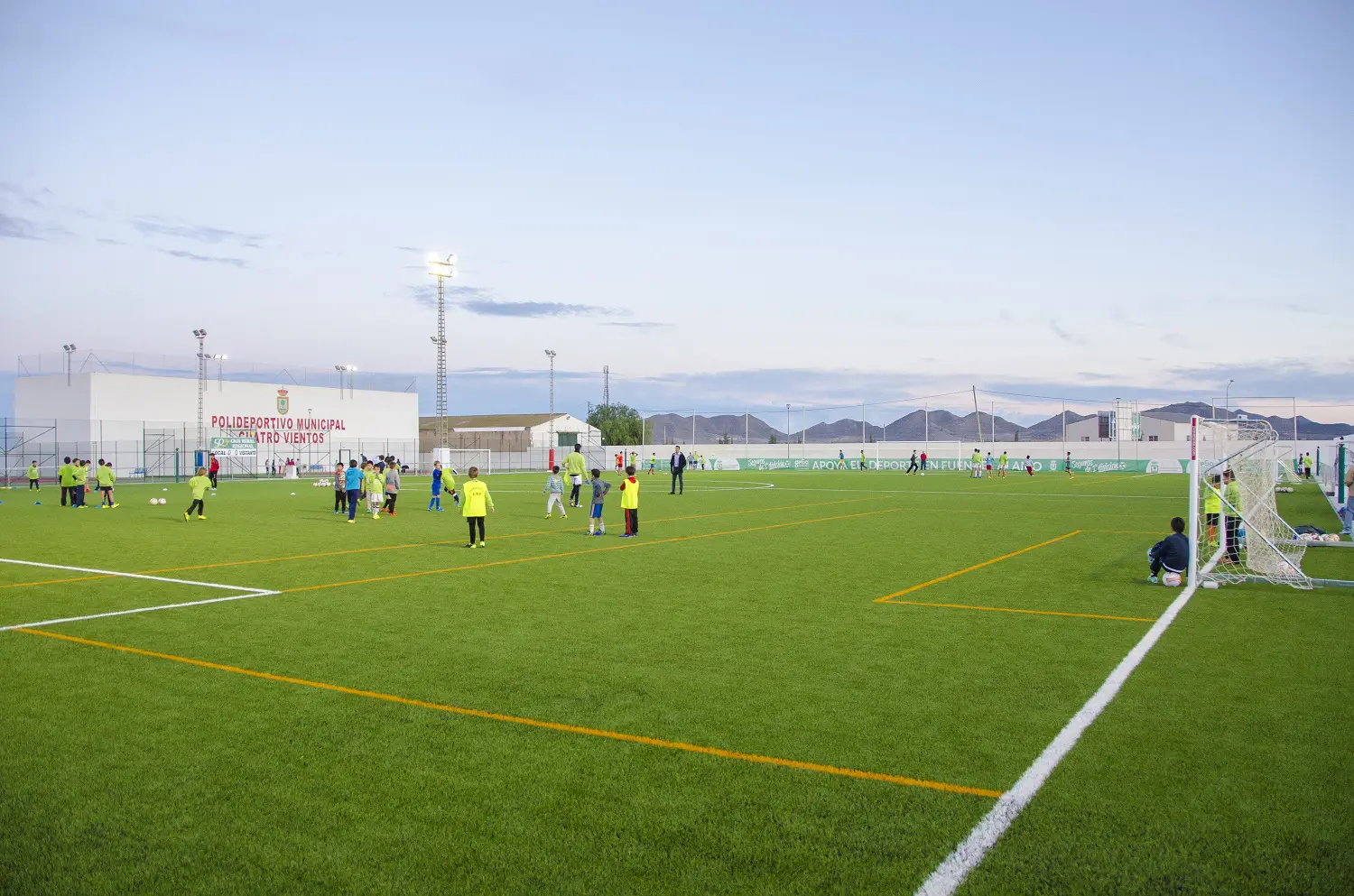
For sports like football, hockey, and futsal, safety comes from the whole system, not only the grass.
1. The infill
SBR (recycled rubber) has long been used in contact-sport turf because it absorbs shock well. Some people worry about it, so many buyers now choose other options. CCGrass offers natural infills such as cork and coconut [confirm availability for India].
2. The system
You can pick the level of infill you want:
- Less-infill systems use curly or fibrillated yarns that hold sand in place, so less infill is needed.
- Non-infill systems need no loose infill at all.
A shock pad under the turf can add comfort and impact absorption.
3. The durability
A hard-wearing surface stays even and keeps its shape, which lowers trip and slip risks. CCGrass products such as Superb and PrideUp are made for long life, with an expected use-life of over 12 years. Superb has been reported to pass over 25,000 cycles in the Lisport XL wear test [attach the test report].
Does artificial grass get hot?
Yes, and this matters a lot in India. In direct summer sun, artificial grass can get much hotter than natural grass. Here is what helps:
- Add shade with trees, pergolas or shade sails.
- Lightly water the surface before use. It cools down quickly.
- Choose turf and infill designed to reduce heat [add CCGrass heat-reducing yarn details, if available].
- Cork and coconut infills can feel cooler than dark rubber.
- Plan play for early morning or evening in peak summer.
- Check the surface with your hand before children or pets step on it.
Is artificial grass toxic? What about PFAS and heavy metals?
Not if it is made from tested materials. But the worry is fair, so here is the clear picture:
- Heavy metals like lead: Good suppliers test for these. Ask for the report.
- PFAS: Some studies have found PFAS in some artificial turf products. Ask your supplier for a PFAS-free statement and a lab report for the exact product you are buying.
- Recycled rubber infill: Regulators and researchers have reviewed it, and the debate continues. If you want to avoid the question, choose cork, coconut, sand or a non-infill system.
- Fire and chemicals: Ask for fire and flammability information for the product.
The simple rule: if a supplier cannot show test reports, do not buy.
Is artificial grass safe for the environment?
There are trade-offs. Artificial grass saves water and needs no mowing, fertilizer or pesticides. But it is plastic, so end-of-life recycling is important.
- CCGrass offers the PRT series, a 100% recyclable artificial grass made with no latex, no PU and no coating.
- Natural infills like cork and coconut are renewable.
- Longer-life products mean less waste over time.
- CCGrass has also invested in solar power at its production base in China [confirm the exact claim and add the source].
Learn more about our sustainability work.
7 questions to ask before you buy artificial grass
- Can I see the REACH, RoHS and EN 71-3 reports for this exact product?
- Is it PFAS-free, and can you show a lab report?
- What is the infill, and is it natural, sand or rubber?
- What is the expected life and the warranty?
- What happens at end of life? Is it recyclable?
- How hot does it get, and how do you reduce heat?
- Who installs it, and have they done similar projects in India?
What do the safety standards mean?
|
Standard |
In simple words |
|---|---|
|
REACH |
European rules to control hazardous chemicals in products |
|
RoHS |
Limits on certain heavy metals such as lead, mercury and cadmium. Made for electronics, but used as an extra check |
|
EN 71-3 |
A toy safety test for how much of certain metals can come out of a material |
|
ASTM |
US testing standards, including performance tests such as shock absorption |
|
DIN |
German standards, often used for sports surfaces |
How to keep artificial grass clean and safe
- Brush the fibres every few weeks to keep them upright.
- Rinse with water. Use mild soap for stains.
- Remove leaves and dust so drains stay clear.
- Top up infill when needed.
- Inspect seams and edges every few months.
FAQs
1. Is artificial grass safe for babies?
Answer: Certified artificial grass is often used in play areas. Choose tested turf with a shock pad, and check surface heat before use.
2. Is artificial grass safe for dogs?
Answer: Yes, when it is certified and kept clean. Choose good drainage and remove waste quickly.
3. Is artificial grass toxic?
Answer: Quality, tested artificial grass should not contain harmful levels of lead or other heavy metals. Always ask for lab reports, including PFAS results.
4. Does artificial grass cause cancer?
Answer: Certified products are tested to avoid harmful substances. Concerns in news stories are mostly about some recycled rubber infill and PFAS. Choose natural infill or non-infill systems and ask for test reports if you are worried.
5. Is artificial grass safe in hot weather?
Answer: It can get very warm in direct sun. Use shade, light watering and cooler infill, and avoid midday use.
6. How long does artificial grass last?
Answer: It depends on the product and use. Some CCGrass sports products are designed for 12 years or more [confirm warranty terms].
7. Is artificial grass better than natural grass?
Answer: It depends on your needs. Artificial grass uses less water and maintenance and works in all weather. Natural grass stays cooler and feels natural. Many Indian homes and sports venues choose artificial for year-round use.
The bottom line
Artificial grass is a safe choice when you buy certified, tested products and install them well. Ask for proof, pick the right infill, and plan for heat. Our team at Gallant Sports can help you choose the right system for your home, school or sports facility.
Talk to us: call +91 99586 77005 or email info@gallantsports.in. Browse our artificial turf for landscape and artificial turf for sports ranges, or learn about CCGrass India.
