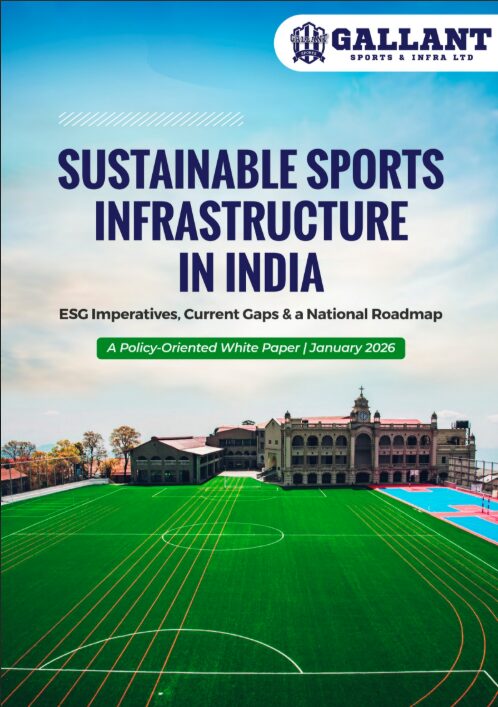
India is investing heavily in sports infrastructure to support grassroots participation, elite performance, and long-term national sporting ambitions. However, sustainability, environmental responsibility, and ESG alignment remain largely absent from infrastructure planning and execution.
Globally, public sports infrastructure is increasingly guided by international sustainability and ESG standards. Countries across Europe, North America, and parts of Asia are aligning sports facilities with frameworks such as UN Sustainable Development Goals (SDGs), net-zero commitments, circular economy principles, and lifecycle-based infrastructure planning. Major international sporting bodies and host nations now mandate environmental performance, material responsibility, and long-term asset efficiency as core requirements — not optional add-ons.
In contrast, India’s public sports infrastructure ecosystem continues to rely on conventional construction practices, limited lifecycle assessment, and fragmented accountability, creating long-term environmental, financial, and governance risks.
This ESG report examines the current state of public sports infrastructure in India, identifies critical gaps in design, material selection, lifecycle planning, and governance, and outlines why ESG integration is now the need of the hour to ensure resilience, efficiency, and global alignment.
Developed to support policy thinking, public-sector planning, and institutional decision-making, the report proposes a high-level ESG framework and initial recommendations to guide the transition toward clean, sustainable, and ESG-compliant sports infrastructure in India.