


Artificial turf has become a popular choice for football grounds, sports academies, schools, commercial sports facilities, and recreational spaces. It provides a consistent playing surface, reduces the need for mowing, and offers greater flexibility than natural grass in many applications. However, installing artificial turf involves more than simply purchasing synthetic grass and laying it on the ground.
Many buyers focus only on the initial artificial turf installation cost. They compare quotations from different suppliers and select the option that appears most affordable. But the actual investment also includes ground preparation, drainage, infill materials, installation, maintenance, repairs, and eventual replacement.
These additional expenses are often overlooked during the planning stage. As a result, a project that initially appears affordable can become more expensive over time.
At Gallant Sports, we believe that choosing the right sports surface starts with understanding the complete project requirements. Whether you are planning a football sports facility, a multi-sport facility or a recreational sports area, knowing the potential costs before installation can help you make a better decision.
In this guide, we explain the hidden costs of artificial turf, what affects the overall budget and how buyers can avoid unnecessary expenses.
What Is the Actual Cost of Artificial Turf Installation?
The actual cost of artificial turf installation depends on more than the price per square metre of synthetic grass.
A complete sports turf project may involve:
- Site inspection and ground assessment
- Excavation and base preparation
- Levelling and compaction
- Drainage system installation
- Geotextile layers, where specified
- Artificial grass carpet and backing
- Sand or rubber infill, depending on the system
- Seaming, jointing and edge finishing
- Sports line markings
- Labour, transportation and equipment
- Testing and final inspection
Each component contributes to the final project cost. The requirements may also differ depending on the sport, site conditions, expected foot traffic and quality of the selected turf system.
For a better understanding of project budgeting, read our guide on FIFA-standard football ground construction costs in India.
Therefore, buyers should evaluate the complete installation proposal rather than comparing artificial grass prices alone.
1. Ground Preparation and Base Construction
One of the most overlooked expenses in artificial turf installation is ground preparation.
Artificial grass needs a stable and properly prepared foundation. Installing turf directly over uneven or poorly compacted soil can create problems such as surface depressions, uneven playing conditions and premature wear.
Before installation, the existing ground may require excavation, soil removal, grading and compaction. Depending on the soil condition, additional stabilisation work may also be necessary.
What makes base preparation expensive?
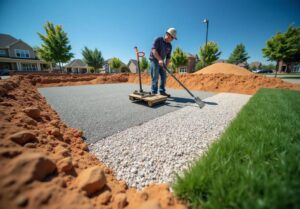
Several factors can increase the cost:
- Excavation: Removing existing soil, debris, vegetation or an old playing surface.
- Soil stabilisation: Treating weak or unsuitable soil to improve foundation stability.
- Aggregate layers: Adding and compacting suitable stone or aggregate materials.
- Levelling: Creating the required surface profile for consistent play and water movement.
- Equipment and labour: Using machinery and skilled workers to prepare the site.
The base construction specification should be determined by site conditions and the intended use of the facility.
For more information about planning a sports facility from the beginning, read our guide to sports facility construction in India.
Buyer’s tip: Ask your contractor to explain the proposed base layers, material specifications, thicknesses and compaction requirements. A low quotation that excludes essential groundwork may result in additional expenses later.
2. Drainage System and Water Management
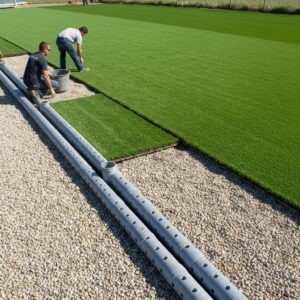
Drainage is another important factor that buyers should consider before installing artificial turf.
Although synthetic grass does not require the same irrigation as natural grass, rainwater still needs to move through the surface and away from the playing area.
Without an appropriate drainage design, water may accumulate on the surface or within the foundation. This can affect playability, increase cleaning requirements and potentially damage parts of the installation.
Possible drainage-related expenses
Depending on the site, a drainage system may require:
- Surface grading and appropriate slopes
- Perforated drainage pipes
- Drainage channels and collection points
- Permeable aggregate layers
- Geotextile separation materials
- Connection to an appropriate water outlet
- Additional excavation and labour
The drainage design should consider local rainfall, soil conditions, ground levels and the expected use of the facility.
For projects in areas that experience heavy monsoon rainfall, proper water management deserves particular attention.
You can also read the Gallant Sports artificial turf FAQs to understand how drainage works in an artificial football turf system.
Buyer’s tip: Do not assume that drainage is automatically included in every artificial turf quotation. Request a clear drainage layout and confirm which materials and installation activities are covered.
3. Artificial Turf Quality and Material Selection
Not all artificial turf products are manufactured for the same purpose.
A synthetic grass carpet designed for decorative landscaping may not provide the playing characteristics required for a football field or a multi-sport facility.
Buyers should consider the following specifications before selecting a product:
- Pile height
- Stitch rate and stitch density
- Yarn material and shape
- Yarn thickness and durability
- Backing construction
- Tuft bind strength
- UV resistance
- Infill compatibility
- Manufacturer’s warranty
A cheaper turf product may reduce the initial purchase price, but its suitability for heavy sports use needs to be evaluated carefully.
For example, a football training facility with frequent daily sessions may experience more wear than a recreational area used occasionally.
The right product should be selected according to the sport, playing frequency, expected user volume and maintenance capacity.
Explore our football sports infrastructure solutions to understand the different requirements of sports turf applications.
Buyer’s tip: Ask for technical datasheets and product samples. Compare specifications rather than relying only on appearance or price.
4. Infill Material and Additional Installation Expenses
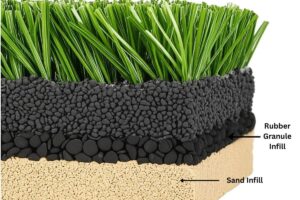
Many artificial turf systems use infill materials to support the fibres and provide the required surface characteristics.
Depending on the turf design, sand, rubber granules or other specified materials may be used.
Infill requirements vary according to the product and application. It is important not to assume that every artificial grass system needs the same material or quantity.
What costs should buyers consider?
- Initial infill material purchase
- Transportation and unloading
- Distribution across the playing surface
- Specialised installation equipment
- Periodic redistribution
- Additional infill where material levels decrease
Heavy usage can cause infill to move away from certain areas, particularly around goal mouths and other high-traffic zones.
If the material is not maintained properly, the surface may become less consistent.
Buyer’s tip: Ask your supplier to specify the type, quantity and purpose of the infill material. Also confirm whether future top-ups are included in the maintenance plan.
5. Transportation, Labour and Equipment Costs
Transportation and installation labour can significantly affect the overall artificial turf project budget.
The final expense depends on the project location, site accessibility, installation area and quantity of materials required.
For example, transporting bulky turf rolls and aggregate materials to a remote location may cost more than delivering them to an easily accessible urban sports facility.
Additional expenses may include:
- Transportation of artificial grass rolls
- Delivery of sand, rubber or aggregate materials
- Loading and unloading
- Skilled installation workers
- Turf cutting and seam joining
- Adhesives and joining accessories
- Machinery rental
- Site supervision
Some quotations include transportation and labour, while others list these as separate charges.
Buyer’s tip: Request an itemised quotation and confirm whether transportation, labour, machinery, installation accessories and finishing work are included.
6. Regular Artificial Turf Maintenance Costs
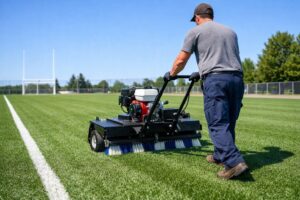
One common misconception is that artificial turf is completely maintenance-free.
Synthetic grass generally requires less maintenance than natural grass in terms of mowing and watering. However, it still needs regular care to maintain its appearance, playing characteristics and service life.
Artificial turf maintenance costs depend on usage, weather, surrounding vegetation and the type of turf system.
Common maintenance activities
Regular brushing: Brushing helps keep the turf fibres upright and distributes infill more evenly.
Debris removal: Leaves, dust, litter and other materials should be removed regularly.
Infill management: Infill levels should be checked, particularly in areas that experience frequent player movement.
Seam inspection: Joining areas should be inspected for separation or damage.
Drainage inspection: Drainage channels and outlets should be checked and cleared when necessary.
Surface cleaning: Appropriate cleaning methods should be followed to remove dirt and other contaminants.
Professional inspection: Periodic inspections help identify problems before they become more expensive to repair.
The maintenance schedule should be based on the manufacturer’s recommendations and the actual usage of the facility.
For a more detailed maintenance plan, read our Sports Facility Management and Maintenance Guide. It explains how regular inspections, cleaning and preventive maintenance help protect sports surfaces.
Buyer’s tip: Before purchasing artificial turf, ask your contractor for a written maintenance schedule. Understand the required activities, recommended equipment and estimated annual maintenance budget.
7. Repair and Replacement Expenses
Artificial turf does not last forever. Its lifespan depends on material quality, installation standards, maintenance practices, weather conditions and usage levels.
Over time, certain areas may experience fibre wear, seam damage, infill loss or backing deterioration.
Repairs may involve:
- Replacing damaged turf sections
- Repairing separated seams
- Adding or redistributing infill
- Fixing edge restraints
- Correcting localised drainage problems
- Replacing worn accessories or components
In some cases, repairs may be limited to a small section. In more serious situations, larger areas of the playing surface may need refurbishment or replacement.
Buyers should also consider the cost of removing the old turf and disposing of or recycling the material when planning a future replacement.
To understand how different sports surfaces perform over time, see our guide on sports flooring lifespan and maintenance.
Buyer’s tip: Ask the supplier about the expected service life of the proposed system, repair options, warranty conditions and end-of-life arrangements. Avoid assuming that the warranty period and actual playing-surface lifespan are the same.
8. Safety Testing and Performance Requirements
For a sports facility, appearance is not the only measure of quality. The playing surface must also be suitable for its intended sport.
Depending on the application and project specification, testing may be required to evaluate certain performance characteristics.
These may include:
- Shock absorption
- Vertical deformation
- Surface hardness
- Rotational resistance
- Ball roll or ball rebound
- Surface drainage performance
- Joint and seam integrity
The exact tests depend on the sport, applicable standards and project requirements.
Testing and inspection can involve additional costs, particularly when specialised equipment or independent testing agencies are required.
However, these activities help buyers assess whether the completed surface meets the agreed technical requirements.
Buyer’s tip: Identify the required performance standards before installation. Ask for relevant test reports and clarify whether testing is included in the project quotation.
9. Lighting, Fencing and Other Supporting Infrastructure
A sports turf facility may need more than an artificial grass surface to become fully operational.
Depending on the business model and intended usage, additional infrastructure may be required.
Common examples include:
- Sports lighting and electrical connections
- Perimeter fencing
- Safety netting
- Entry gates
- Goal posts and sports equipment
- Seating and spectator areas
- Walkways and access paths
- CCTV and security arrangements
- Changing rooms and washrooms
These components can significantly increase the total project investment.
For a commercial football turf, lighting may be particularly important if the facility plans to operate evening sessions. Schools and sports academies may also need fencing and access-control arrangements.
A good example of a complete facility is the ZYNG Sports Arena project by Gallant Sports in Noida, which includes artificial football turf, padel courts, box cricket, pickleball, lighting, fencing and drainage infrastructure.
Buyer’s tip: Prepare a complete facility requirement list before requesting quotations. This helps avoid unexpected additions during construction.
10. Warranty, After-Sales Support and Project Management
A warranty is an important part of an artificial turf purchase, but buyers should understand exactly what it covers.
A turf product warranty may cover specific manufacturing defects, while installation workmanship may have separate terms.
Some warranties may also contain conditions relating to maintenance, usage, cleaning products and unauthorised repairs.
Before finalising a purchase, check:
- Warranty duration
- Coverage for yarn and backing
- Installation workmanship coverage
- Exclusions and limitations
- Maintenance obligations
- Repair and replacement procedure
- Availability of technical support
Project management and after-sales support also deserve attention. A reliable contractor should explain the installation process, provide relevant product documentation and guide the facility owner on surface maintenance.
Read our detailed guide on turf warranty and what is really covered before finalising your sports turf purchase.
Buyer’s tip: Read the complete warranty document instead of relying on verbal assurances. Keep invoices, technical datasheets, installation records and maintenance reports safely.
How to Calculate the Total Cost of Artificial Turf?
The best way to evaluate an artificial turf project is to calculate its total lifecycle cost instead of focusing only on the initial installation price.
A basic budgeting approach is:
Total Project Cost = Initial Installation + Annual Maintenance + Repairs + Refurbishment + Replacement and Disposal Costs
For example, a buyer planning a football turf should prepare separate budget estimates for:
| Cost category | What to include |
|---|---|
| Initial installation | Turf carpet, base, drainage, infill and labour |
| Supporting infrastructure | Lighting, fencing, gates and equipment |
| Annual maintenance | Cleaning, brushing, inspections and infill management |
| Repairs | Seam repairs, damaged sections and edge corrections |
| Refurbishment | Major surface maintenance and component renewal |
| Replacement | New turf, removal of old materials and disposal |
The actual figures should be obtained through a site assessment and a detailed project quotation.
This approach gives buyers a more realistic understanding of the investment and helps them plan their finances over the facility’s expected operating life.
7 Practical Ways to Avoid Unexpected Artificial Turf Expenses
Planning properly before installation can help reduce avoidable costs.
- Choose turf according to the sport: Select a product designed for the intended activity instead of purchasing based only on appearance or price.
- Get the site inspected: Understand soil conditions, ground levels and drainage requirements before starting construction.
- Compare detailed quotations: Check material specifications, construction layers, installation scope and exclusions.
- Invest in proper drainage: A suitable drainage system can help prevent water-related problems and costly corrective work.
- Follow the maintenance schedule: Regular brushing, cleaning and inspections can help protect the surface.
- Understand warranty conditions: Confirm what is covered, what is excluded and which maintenance activities are compulsory.
- Plan for future replacement: Include refurbishment and end-of-life costs in your long-term facility budget.
Why Choose Gallant Sports for Artificial Turf and Sports Infrastructure?
Choosing an artificial turf supplier is an important decision because the quality of the complete sports facility depends on more than the surface material.
Gallant Sports provides sports infrastructure solutions, including artificial turf systems for sports applications. The right project approach involves understanding the site, identifying the sport-specific requirements and selecting suitable materials and construction methods.
From product selection and installation planning to maintenance guidance, buyers should have a clear understanding of what their sports facility requires.
When evaluating a project with Gallant Sports, buyers can discuss:
- Artificial turf requirements for football and multi-sport applications
- Suitable surface specifications for the intended use
- Base preparation and drainage considerations
- Infill and installation requirements
- Sports facility maintenance
- Project-specific technical requirements
The ZYNG Sports Arena project is an example of Gallant Sports’ multi-sport infrastructure work, bringing different sports surfaces and supporting infrastructure together in one facility.
The goal should be to develop a sports surface that offers suitable playing characteristics, durability and long-term value.
Visit Gallant Sports to explore sports infrastructure solutions or discuss your artificial turf project with the team.
Conclusion
Artificial turf can be a practical investment for sports academies, schools, commercial facilities and recreational spaces. However, the initial purchase price does not represent the complete cost of ownership.
Ground preparation, drainage, material selection, infill, transportation, installation, maintenance, repairs and eventual replacement all contribute to the final investment.
Buyers who understand these hidden costs can compare suppliers more effectively, prepare realistic budgets and avoid unnecessary expenses after installation.
Before selecting an artificial turf system, focus on the quality of the complete installation, the suitability of the materials and the availability of long-term maintenance support.
A properly planned sports facility is not simply about installing synthetic grass. It is about creating a reliable playing surface that meets the needs of its users over time.
Frequently Asked Questions About Artificial Turf Costs
1. What are the hidden costs of artificial turf installation?
Answer: The hidden costs can include ground excavation, base preparation, drainage, infill materials, transportation, installation labour, maintenance, repairs and future replacement.
2. Is artificial turf maintenance-free?
Answer: No. Artificial turf requires regular brushing, debris removal, infill management, seam inspection and cleaning. The maintenance frequency depends on usage and the selected turf system.
3. How long does artificial turf last?
Answer: The lifespan varies according to product quality, installation, usage, weather conditions and maintenance. Buyers should ask the supplier for product-specific service-life guidance and warranty details. Read our guide on sports flooring lifespan and maintenance for more information.
4. Does artificial turf require a drainage system?
Answer: Most outdoor sports turf projects require an appropriate drainage solution. The design depends on the site conditions, rainfall, soil characteristics and turf system.
5. What affects the cost of football turf installation?
Answer: Important factors include the size of the playing area, turf specifications, base construction, drainage, infill, transportation, labour and additional infrastructure such as fencing and lighting. Our football ground construction cost guide explains these project considerations in more detail.
6. How often should artificial turf be maintained?
Answer: Maintenance frequency depends on how frequently the surface is used. Regular debris removal, brushing and inspection should form part of the maintenance programme. High-use sports fields may require more frequent grooming.
7. Is cheaper artificial turf a good investment?
Answer: Not necessarily. A low-priced product may not provide the specifications or durability required for the intended sport. Buyers should compare technical specifications, installation quality, warranty and lifecycle costs before making a decision.
8. What should I check before hiring an artificial turf installation company?
Answer: Check the company’s sports infrastructure experience, product specifications, installation methodology, drainage design, project references, warranty terms and after-sales maintenance support.
9. What is included in a complete artificial turf installation quotation?
Answer: A detailed quotation should clearly identify the turf product, base preparation, drainage, infill, installation labour, transportation, joining materials, line markings and supporting infrastructure. Any exclusions should also be mentioned.
10. How can I reduce the long-term cost of artificial turf?
Answer: Select a suitable turf system, invest in proper groundwork and drainage, follow the manufacturer’s maintenance instructions and address minor damage before it becomes a major repair.
