


Building Better Sports Infrastructure
Sports infrastructure is about more than what we see on the playing surface. The materials beneath it, the planning behind it and the way different facilities come together all influence the experience of athletes and the long-term value of an investment.
This edition of Gallant Pulse looks at these considerations through three perspectives: a closer look at the materials beneath India’s sports fields, a multi-sport project delivered at MAHE Manipal, and a fresh conversation on designing sports infrastructure for India’s changing climate.
In This Edition
- In the News: Beyond the Turf: What We Put Beneath India’s Sports Fields Matters
- Project Spotlight: Six Sports Disciplines. One Integrated Campus. MIT Manipal
- Thought Leadership: Designing Sports Infrastructure for India’s Climate: Beyond the Surface
In the News

Beyond the Turf: What We Put Beneath India’s Sports Fields Matters
When we talk about sports infrastructure, the conversation often starts with the visible elements: the turf, the track, the court and the playing experience. But some of the most important decisions happen beneath the surface.
In its latest feature, Gallant Sports explores why the materials used in synthetic sports fields deserve greater attention, from infill composition and cushioning to performance and material selection.
The article also introduces GallantBounce, Gallant Sports’ synthetic-turf infill solution incorporating a minimum of 20% Nike Grind™ rubber sourced from end-of-life footwear. It brings recycled material into sports infrastructure while keeping the requirements of active playing surfaces in focus.
The broader message is simple: building better sports facilities means looking at the complete playing system, not just the surface athletes see.
Read the full feature: https://gallantsports.in/beyond-the-turf-what-we-put-beneath-indias-sports-fields-matters/
Project Spotlight
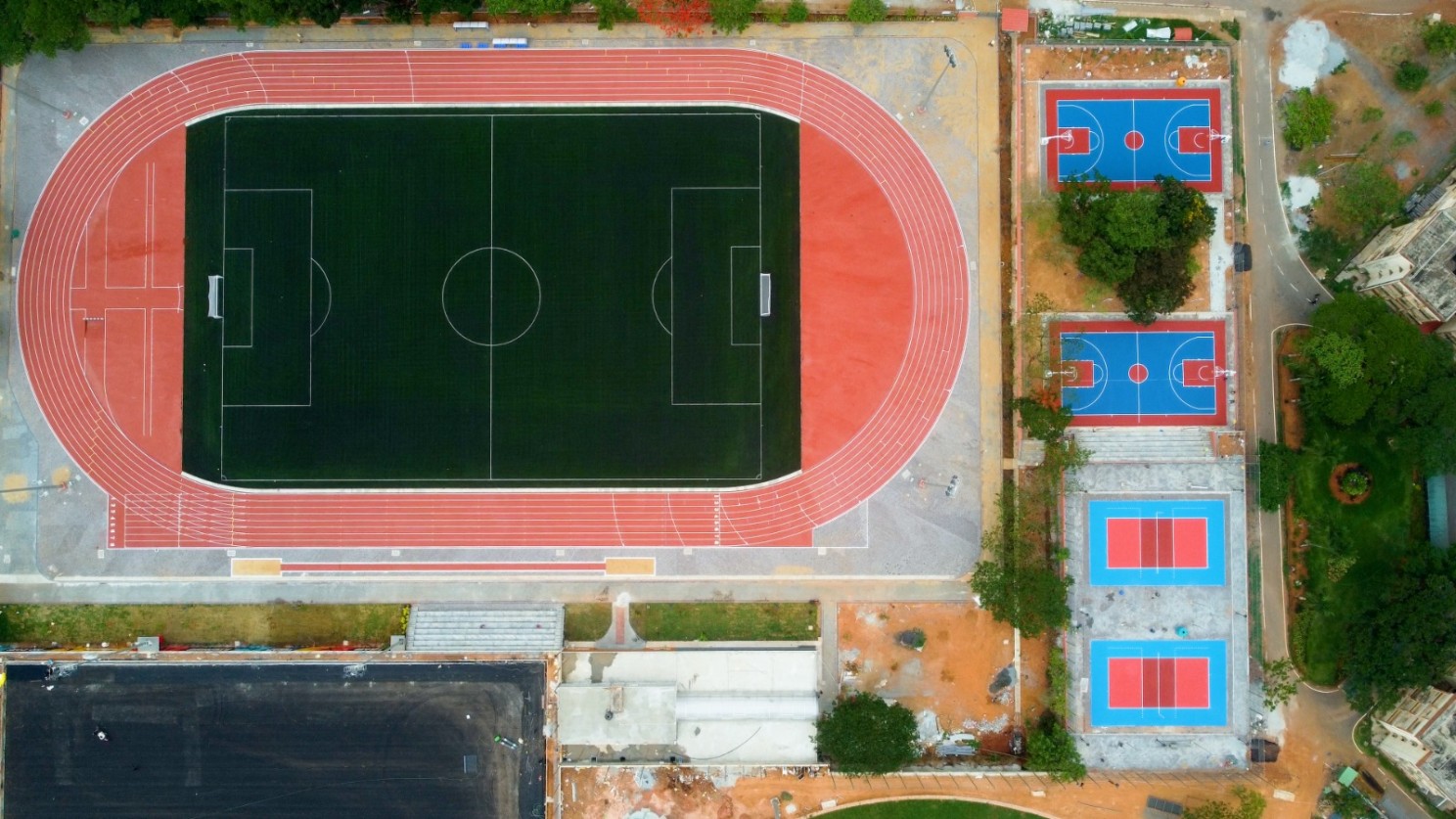
MIT Multi-Sports Outdoor Facility | MAHE Manipal, Karnataka
What does it take to bring multiple sports disciplines together within one campus?
The MIT campus at Manipal Academy of Higher Education offers a compelling example.
Gallant Sports delivered the facility as a single turnkey project, bringing together athletics, hockey, football, cricket and multi-court infrastructure within one coordinated development.
Project Highlights
- Athletics: 400-metre, 8-lane synthetic track with World Athletics Class I certification.
- Hockey: FIH Category 2 water-based hockey field with an elastic shock pad and automated sprinkler irrigation.
- Football: FIFA Quality artificial turf.
- Cricket: Natural grass outfield, five clay pitches and dedicated practice nets.
- Basketball and Volleyball: Outdoor acrylic courts with sports-specific line marking.
- Integrated execution: Base construction, drainage, irrigation, surfacing and installation coordinated under one turnkey contract.
The complete scope was delivered over eight calendar months. The project demonstrates how coordinated planning can help educational institutions develop a broader sporting ecosystem instead of building individual facilities in isolation.
For universities, this approach can create more opportunities for student participation, structured training and inter-university competition, while bringing multiple sporting requirements together through one delivery team.
Explore the complete case study: https://gallantsports.in/mit-multi-sports-outdoor-facility-manipal-academy-of-higher-education-karnataka/
Thought Leadership
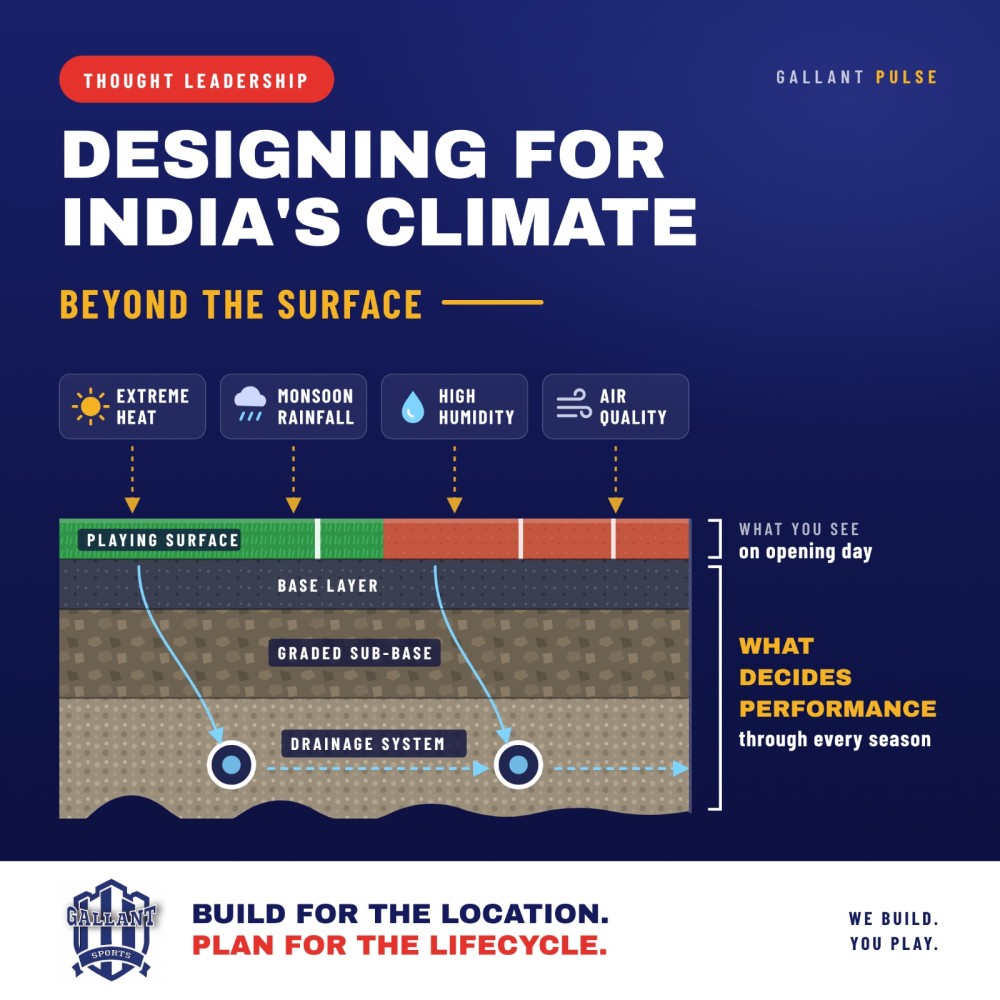
Designing Sports Infrastructure for India’s Climate: Beyond the Surface
India’s sporting ambitions are growing, but the conditions in which athletes train and compete vary significantly across the country. Extreme summer temperatures, intense monsoon rainfall, humidity and seasonal air-quality challenges can all influence how outdoor sports facilities are used and maintained.
This raises an important question for institutions planning new facilities: Are we designing sports infrastructure for the conditions it will actually face?
Climate-responsive planning starts before construction
A sports facility should be planned around its location, intended use and local environmental conditions. These factors influence decisions throughout the project, from site preparation to surface selection and maintenance.
1. Drainage is a design priority, not an afterthought
Heavy rainfall can disrupt training and competition when water management is not considered from the beginning. Site grading, sub-base preparation and drainage systems need to be designed around local rainfall patterns, ground conditions and the selected sports surface.
2. Surface selection must reflect local conditions
Different surfaces respond differently to heat, moisture, UV exposure and patterns of use. The right specification depends on the sport, expected playing hours, site conditions and performance requirements. A solution suited to one location may not be the right choice for another.
3. Maintenance planning is part of the investment
A facility’s performance depends on more than its initial construction. Regular inspections, appropriate cleaning, surface-specific maintenance and timely repairs help preserve playing characteristics and support long-term usability.
Maintenance requirements should therefore be considered during planning and budgeting, rather than only after the facility is handed over.
4. Plan for the people who will use the facility
Shade, drinking-water access, suitable operating schedules, lighting and safe circulation can influence how comfortably and consistently people use an outdoor sports facility. These considerations are especially relevant for schools, universities and community sports centres.
Build for the location. Plan for the lifecycle.
Climate-responsive sports infrastructure is not about finding one surface that solves every environmental challenge. It is about making informed decisions across site engineering, drainage, material selection, facility planning and maintenance.
For institutions investing in sports infrastructure, the goal should be to create facilities that meet their sporting requirements while responding to the conditions in which they will operate.
Because a facility’s quality is not defined only by how it looks on opening day. It is also shaped by how well it performs through seasons of training, competition and everyday use.
The Road Ahead
From understanding what lies beneath a playing surface to delivering integrated multi-sport facilities, every project offers an opportunity to make better decisions about how India builds for sport.
At Gallant Sports, we continue to focus on technical planning, coordinated execution and sports infrastructure designed around the needs of athletes and institutions.
In the next edition, we will continue exploring the ideas, projects and developments shaping India’s sporting infrastructure landscape.
We Build, You Play.
Source: LinkedIn
