


If you’re planning to build a badminton court, one of the most important decisions you’ll make is choosing the right flooring. Badminton court flooring in Delhi plays a major role in player safety, game performance, maintenance costs, and the overall lifespan of the court. Whether you’re building a court for a school, sports academy, club, residential society, or commercial sports facility, selecting the right flooring from the beginning can save both time and money in the long run.
A well-designed badminton court isn’t just about the playing area. It also includes proper sub-base preparation, shock absorption, lighting, markings, and regular maintenance. In this guide, we’ll explain everything you need to know about badminton court flooring construction, estimated costs, maintenance, and how to choose the best flooring for your project.
Why Choosing the Right Badminton Court Flooring Matters
Badminton is a fast-paced sport that involves quick movements, sudden stops, jumps, and direction changes. Poor-quality flooring can increase the risk of injuries and reduce playing comfort.
A professionally installed badminton court flooring system offers:
- Better grip and player safety
- Comfortable shock absorption
- Consistent ball movement
- Long service life
- Easy cleaning and maintenance
- Professional tournament appearance
Whether your court is used daily or occasionally, investing in quality flooring improves both performance and durability.
Types of Badminton Court Flooring
There are several flooring options available today. Each has its own advantages depending on your budget and usage.
| Flooring Type | Best For | Durability | Maintenance | Indoor/Outdoor |
|---|---|---|---|---|
| PVC Vinyl Sports Flooring | Schools, Academies, Clubs | High | Low | Indoor |
| Wooden Sports Flooring | Professional Stadiums | Very High | Medium | Indoor |
| Synthetic Sports Flooring | Multi-purpose Sports Halls | High | Low | Indoor |
| Acrylic Flooring | Recreational Courts | Medium | Low | Outdoor |
Among these options, PVC vinyl badminton flooring remains one of the most popular choices because it provides excellent cushioning, grip, and affordability.
Badminton Court Flooring Construction Process
Proper badminton court flooring construction involves much more than simply laying flooring material. Every layer contributes to the court’s performance and durability.
1. Site Inspection
The first step is inspecting the site to understand:
- Available space
- Floor level
- Moisture conditions
- Existing surface quality
- Indoor ventilation
This helps determine the right flooring system.
2. Base Preparation
A strong and level base is essential.
Depending on the project, the base may include:
- Cement concrete
- Wooden subfloor
- Existing sports hall flooring
- Self-leveling compound
Any uneven surface can affect player movement and flooring life.
3. Moisture Testing
Moisture trapped beneath flooring can cause:
- Bubble formation
- Adhesive failure
- Flooring damage
Professional installers always perform moisture testing before installation.
4. Installing Cushion Layers
Most modern badminton courts include cushioning layers that reduce impact on players’ knees and ankles.
Benefits include:
- Better comfort
- Reduced fatigue
- Improved safety
- Better bounce consistency
5. Flooring Installation
The selected badminton flooring is carefully installed using sports-grade adhesive.
The installation includes:
- Proper alignment
- Bubble-free fitting
- Joint sealing
- Expansion gaps where required
6. Court Marking
Once the flooring is complete, official badminton court markings are applied according to international dimensions.
Correct markings improve gameplay and tournament readiness.
7. Final Quality Inspection
Before handing over the court, professionals check:
- Surface level
- Adhesion
- Markings
- Grip
- Finishing quality
- Player safety standards
Standard Badminton Court Dimensions
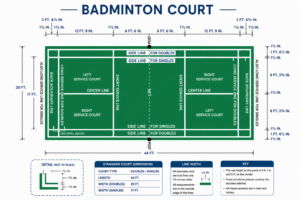
Understanding the correct dimensions helps during planning.
| Court Area | Measurement |
|---|---|
| Total Length | 13.40 meters |
| Singles Width | 5.18 meters |
| Doubles Width | 6.10 meters |
| Net Height | 1.55 meters |
| Recommended Ceiling Height | 9–12 meters |
Additional playing space around the court is recommended for player movement and safety.
Which Flooring is Best for Indoor Badminton Courts?
Indoor courts require flooring that provides:
- Excellent traction
- Shock absorption
- Slip resistance
- Comfortable movement
- Long durability
PVC sports flooring is widely preferred because it balances performance, comfort, and maintenance.
Wooden flooring is another premium option often used in professional stadiums due to its natural playing feel.
Features of High-Quality Badminton Court Flooring
A professional badminton flooring system should offer:
Shock Absorption
Reduces stress on joints during long matches.
Slip Resistance
Provides better grip while changing directions quickly.
Cushion Comfort
Allows players to play longer without excessive fatigue.
Wear Resistance
Handles thousands of playing hours without major damage.
Easy Cleaning
Requires minimal effort for regular maintenance.
Attractive Appearance
Creates a professional sports environment.
Factors That Affect Badminton Court Flooring Cost
Many people search for the cost before starting a project.
However, pricing depends on several project-specific factors.
Flooring Material
Different materials have different price ranges.
Examples include:
- PVC flooring
- Wooden flooring
- Synthetic flooring
Court Size
Larger courts require:
- More material
- More adhesive
- Additional labour
- Extra accessories
Base Preparation
If the existing floor requires repairs or leveling, construction costs increase.
Cushion System
Adding professional cushioning improves player safety but also affects the total budget.
Lighting
Indoor badminton courts often require specialized sports lighting.
Lighting quality impacts player visibility and playing experience.
Accessories
Additional equipment may include:
- Badminton poles
- Net system
- Wall padding
- Side curtains
- Sports seating
Location
Transportation, labour availability, and site conditions can also influence the overall project cost.
Basic Cost Overview
Instead of focusing on a fixed price, it is better to understand the components that influence your investment.
| Cost Component | Depends On |
|---|---|
| Flooring Material | PVC, Wooden, Synthetic |
| Surface Preparation | Existing Floor Condition |
| Installation | Court Size |
| Cushion Layer | Selected System |
| Court Marking | Number of Courts |
| Accessories | Optional Requirements |
Disclaimer: The prices for badminton court flooring are only basic standard estimates and should not be considered fixed quotations. Actual project costs vary depending on material selection, site conditions, project size, customization, transportation, labour, and other technical requirements. Final pricing can only be confirmed after a proper site inspection and project assessment.
How Long Does Installation Take?
The installation timeline depends on:
- Number of courts
- Flooring type
- Base preparation
- Weather (if construction work is involved)
Generally, small indoor badminton court projects can be completed within a few days, while larger sports complexes may require additional time.
Badminton Court Flooring Maintenance Tips
Proper maintenance increases flooring life and maintains player safety.
Daily Cleaning
- Remove dust regularly
- Use a soft microfiber mop
- Avoid abrasive brushes
Weekly Cleaning
Use sports-floor-approved cleaning solutions.
Avoid excessive water.
Protect Against Sharp Objects
Never drag:
- Gym equipment
- Chairs
- Metal furniture
These can scratch the surface.
Check Court Markings
Inspect markings regularly for wear.
Reapply if necessary.
Maintain Indoor Temperature
Extreme moisture and humidity may affect certain flooring systems.
Proper ventilation helps maintain flooring quality.
Repair Minor Damage Early
Small cuts or loose joints should be repaired immediately to prevent larger issues.
Common Mistakes to Avoid
Many projects experience problems because of avoidable mistakes.
These include:
- Choosing flooring based only on price
- Ignoring subfloor preparation
- Hiring inexperienced installers
- Using low-quality adhesives
- Skipping moisture testing
- Delaying maintenance
Professional installation reduces these risks significantly.
Where is badminton court flooring used?
Modern badminton flooring is suitable for:
- Sports academies
- Schools
- Colleges
- Universities
- Community centres
- Indoor stadiums
- Residential clubs
- Corporate sports facilities
- Hotels
- Fitness centres
How to Choose the Right Flooring Partner
Before selecting a contractor, consider:
- Industry experience
- Completed sports flooring projects
- Installation expertise
- Material quality
- Technical support
- Maintenance guidance
- Warranty options
- After-sales service
Choosing an experienced sports flooring company helps ensure the court meets quality and performance standards.
Why Choose Gallant Sports?
At Gallant Sports, we specialize in designing and installing high-quality sports infrastructure across India. Our team delivers complete badminton court flooring solutions—from site inspection and flooring selection to professional installation and post-installation support.
Our services include:
- Professional badminton court flooring installation
- Indoor sports flooring solutions
- PVC vinyl sports flooring
- Wooden sports flooring
- Court construction support
- Sports court accessories
- Maintenance guidance
Our goal is to provide durable, safe, and performance-driven badminton courts tailored to your specific project requirements.
Internal Resources You May Find Helpful
If you’re planning a complete sports facility, you may also be interested in:
- Indoor Sports Flooring Solutions
- PVC Vinyl Sports Flooring
- Wooden Sports Flooring
- Multi-Sport Court Construction
- Sports Infrastructure Solutions
These resources can help you compare different flooring systems based on your project needs.
Frequently Asked Questions
1. Which flooring is best for an indoor badminton court?
Answer: PVC vinyl sports flooring and wooden sports flooring are among the most preferred options because they provide excellent grip, cushioning, and durability.
2. How long does badminton court flooring last?
Answer: With proper installation and regular maintenance, quality badminton court flooring can last for many years. The actual lifespan depends on usage, material quality, and maintenance practices.
3. Is badminton court flooring easy to maintain?
Answer: Yes. Regular cleaning, moisture control, and timely repairs help keep the court in excellent condition with minimal maintenance.
4. What affects badminton court flooring construction costs?
Answer: The overall cost depends on several factors, including flooring material, court size, base preparation, cushioning system, accessories, labour, transportation, and project location. There is no single fixed price for every project.
5. Can existing halls be converted into badminton courts?
Answer: Yes. Many existing indoor halls can be converted into badminton courts after evaluating the floor condition, available space, ceiling height, and ventilation.
Final Thoughts
Building a badminton court is a long-term investment, and selecting the right badminton court flooring in Delhi is one of the most important decisions in the entire project. From proper badminton court flooring construction to routine maintenance, every step plays a role in creating a safe, durable, and enjoyable playing experience.
Rather than focusing only on the initial cost, consider the flooring’s quality, player comfort, durability, and long-term maintenance requirements. A professionally installed court offers better performance, reduces maintenance issues, and provides lasting value for schools, academies, clubs, residential communities, and commercial sports facilities.
If you’re planning a new badminton court or upgrading an existing one, Gallant Sports can help you choose the right flooring solution based on your space, usage, and budget while ensuring high construction standards and long-term reliability.
